Research

Four interconnected lines of research

01

Social brain & oxytocin

How does a neuropeptide change the way we relate to others?

Oxytocin can alter how we attend to, evaluate and interact with other individuals. We investigate the brain mechanisms behind these effects across species, from humans to non-human primates and complementary animal models. Our work combines behavioural approaches with neurophysiology, brain imaging and targeted manipulation of oxytocin neurons to move from observing oxytocin's effects to understanding the circuits that produce them.

A major current direction asks how the oxytocin system interacts with neural representations of social partners, space and territory.

ERCExplore OxytocINspace →
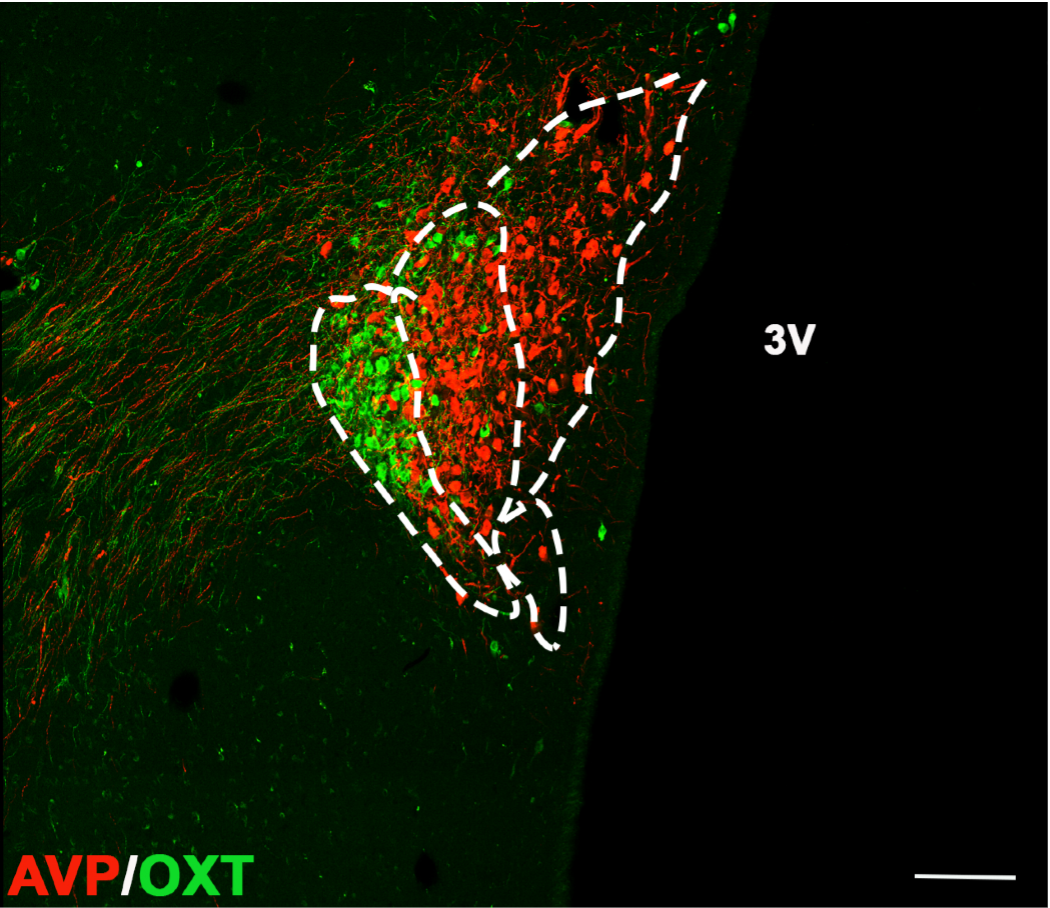
Macaque PVN oxytocin and vasopressin organization
OT / AVP organization in macaque PVN
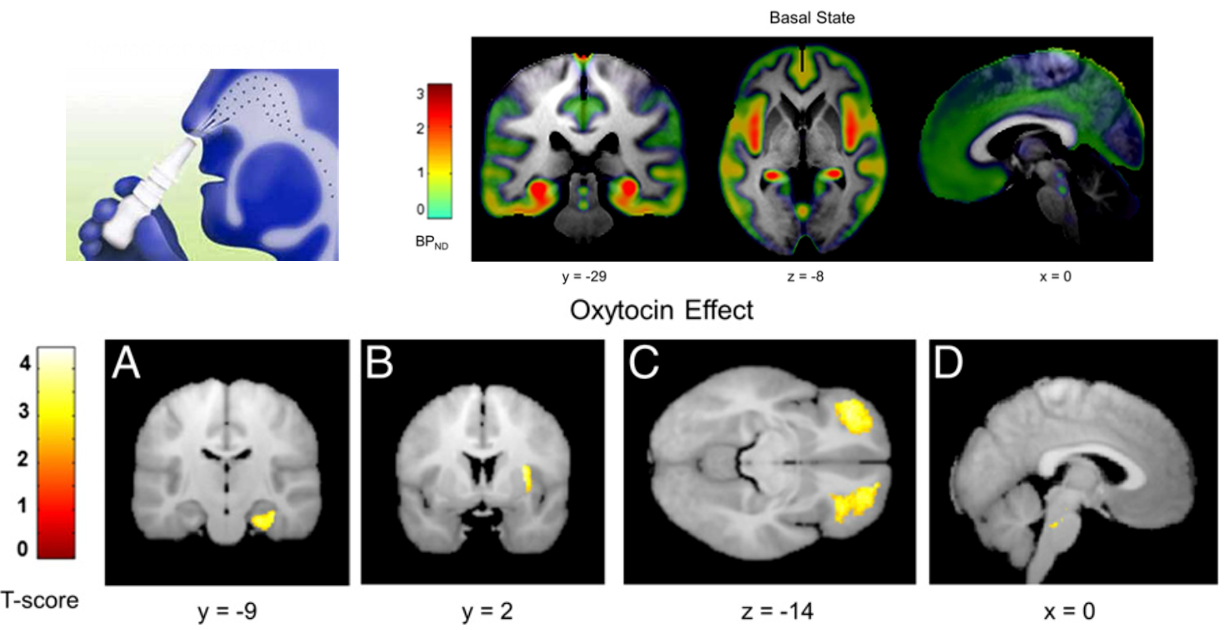
Human PET study of oxytocin effects on serotonin signalling
Oxytocin effects on serotonin signalling in the human brain (PNAS, 2014)
02

Social cognition & neurodevelopmental disorders

What makes another person's face, gaze or intentions socially meaningful?

We study how social behaviour emerges and how people learn to extract meaning from the faces, gaze and actions of others. From the early appearance of spontaneous social gestures in infancy to differences in social perception in autism and other neurodevelopmental conditions, our work examines the mechanisms that make other people socially meaningful. Eye contact, facial expression, perceived trustworthiness and spontaneous visual exploration provide windows onto the processes that guide social attention and judgement.

Alongside conventional behavioural and neuroimaging approaches, we develop new ways of measuring how people actively explore visual information — including DigiTrack, our finger-tracking method for revealing where attention is directed without requiring eye tracking.

Emergence of social grooming in preverbal infants (Scientific Reports, 2026)
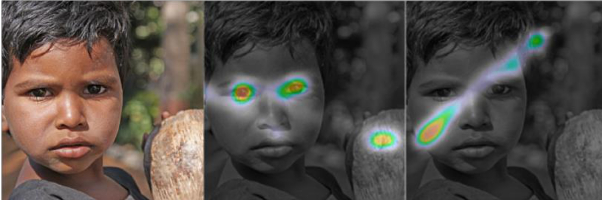
Face exploration maps
Visual exploration in autistic children (Nature Communications, 2019)
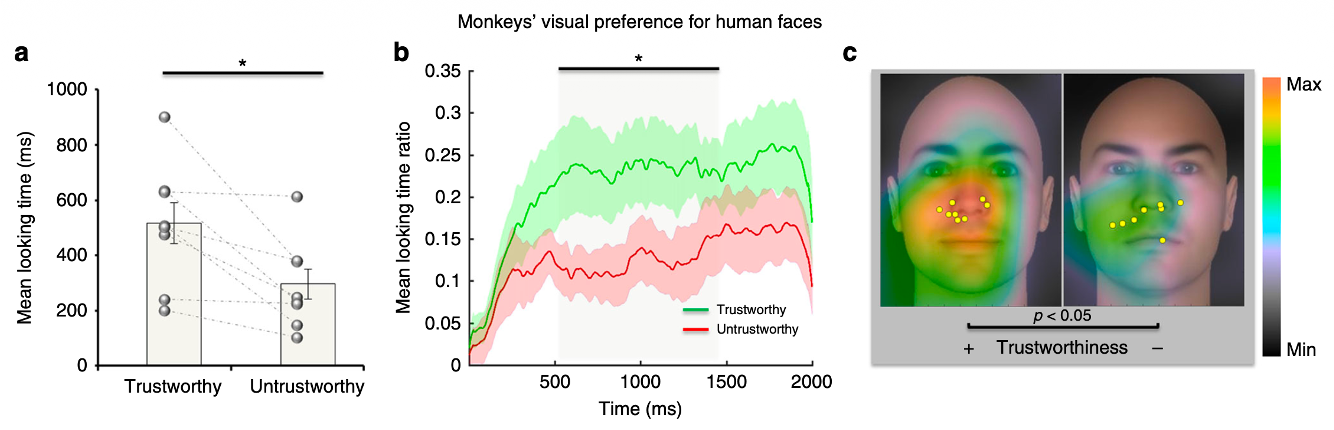
Macaque trustworthiness study
Visual preference for trustworthy faces in macaques (Nature Communications, 2018)
03

Action & brain plasticity

How does the brain prepare and control movement — and adapt when the body changes?

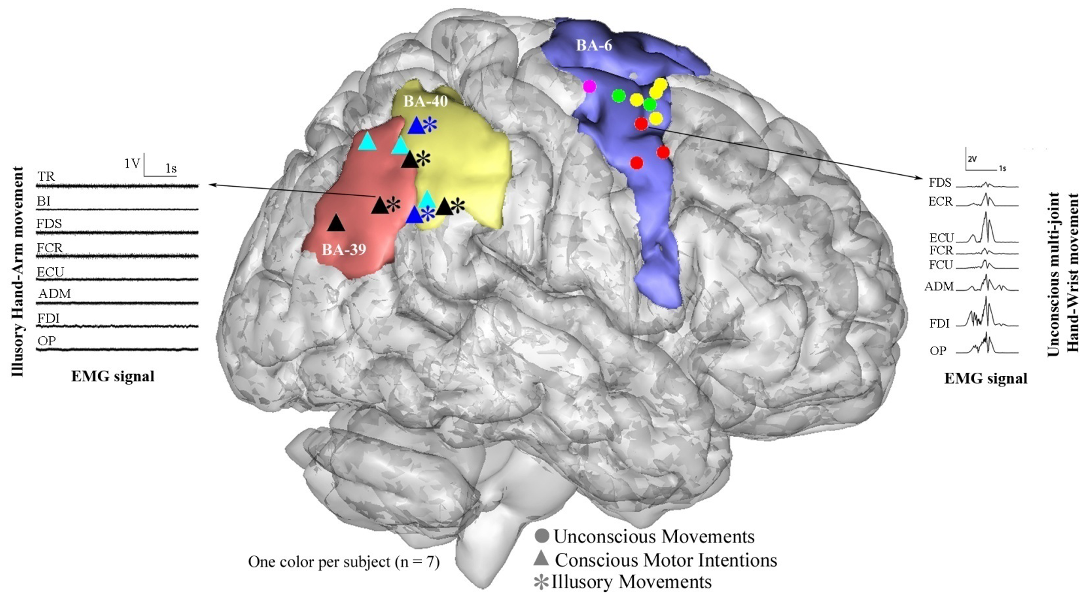
Our work has explored the neural architecture of voluntary action, from motor imagery and movement preparation to the causal contribution of parietal and motor cortical areas. Studies combining neurological patients, brain imaging and direct cortical stimulation have helped reveal how intentions are translated into actions.

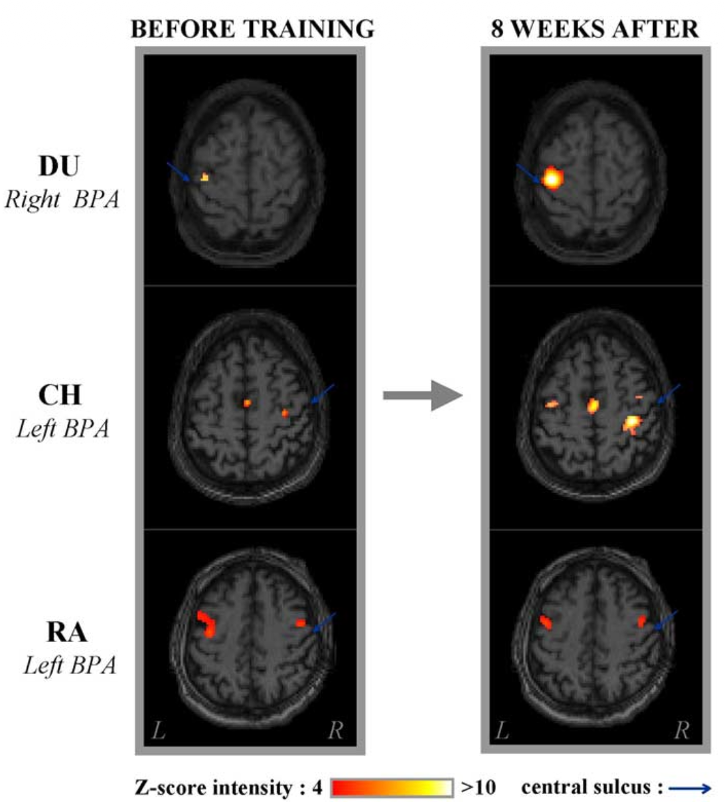
We also investigate the remarkable plasticity of the motor system after major changes to the body, including amputation, phantom limbs and hand transplantation — asking how the brain preserves, reorganizes or rebuilds representations of the body and its movements.

Direct cortical stimulation map
Direct cortical stimulation: intention, movement and motor awareness (Science, 2009)
Motor plasticity after amputation
Motor plasticity after amputation (NeuroImage, 2003)
04

Awareness, agency & consciousness

How does brain activity become conscious experience?

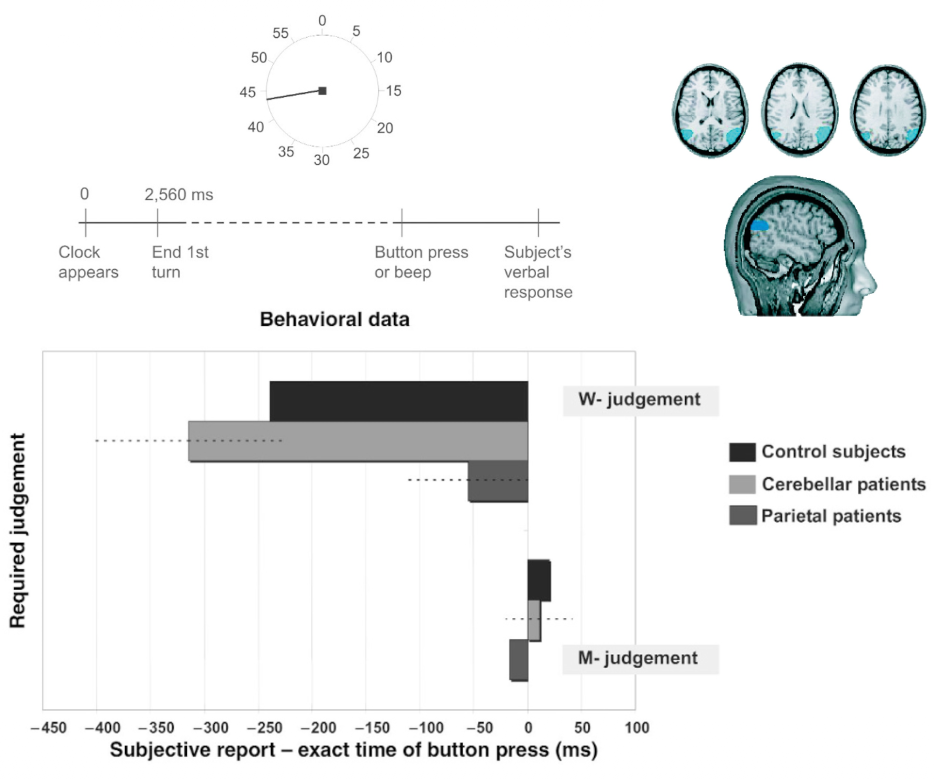
A longstanding strand of our research asks how we become aware of our own intentions and actions. Using experimental paradigms inspired by Libet, neurological patients and studies of agency, we have investigated the neural processes that distinguish producing an action from consciously experiencing ourselves as its author. Work on parietal cortex showed, in particular, that awareness of intending to move can be selectively disrupted even when movement itself remains possible.

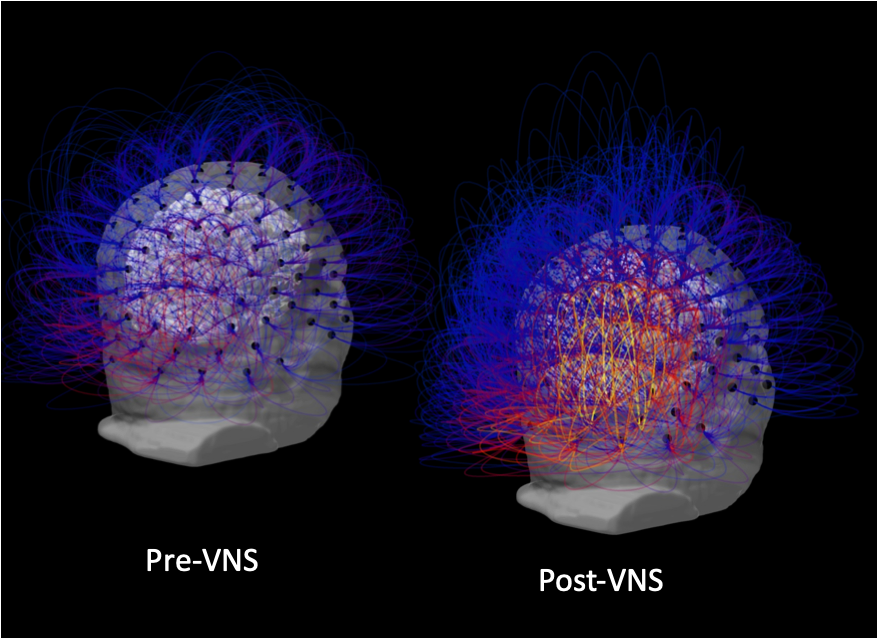
At the other end of the spectrum, we have studied patients with severe disorders of consciousness, asking whether apparently lost brain functions can persist and whether neuromodulation — notably vagus nerve stimulation — can help restore them.

Parietal cortex and conscious timing of action
Libet paradigm in parietal patients (Nature Neuroscience, 2004)
EEG connectivity before and after vagus nerve stimulation
Vagus nerve stimulation and recovery of consciousness (Current Biology, 2017)

From research method to digital tool

Digit-tracking turns active visual exploration into a quantitative window on cognition — from measuring where we look to probing how we learn to read.

DigiTrack

Measuring visual exploration through touch
DigiTrack method (Nature Communications, 2019)

DigiTrack transforms visual exploration into an active touch-based task. By revealing a blurred image through a finger-controlled viewing window, it provides a calibration-free proxy for gaze exploration that can be deployed beyond the laboratory. Initially developed to study visual and social attention, the approach has since been applied across populations and cognitive domains.

DigiRead

From visual exploration to reading
DigiRead training and assessment (Scientific Reports, 2024)

DigiRead extends the digit-tracking principle to reading. As written information is progressively revealed, the corresponding phonemes are heard, reinforcing dynamic grapheme–phoneme matching during reading training. The same approach provides quantitative measures of individual reading strategies, with the aim of identifying early markers of reading difficulties.